 Open Middle®
Directions: Using the digits 1 to 9, at most one time each, place a digit in each box to make the least possible difference.
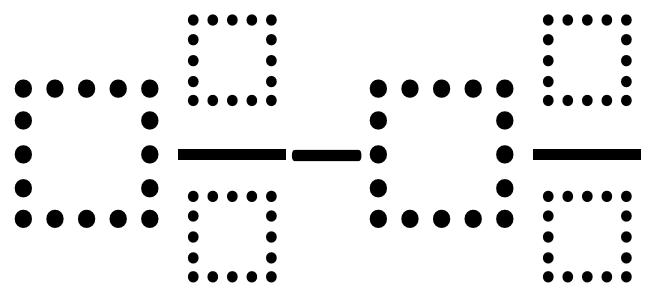
Hint
What does the least possible difference mean? (We’re considering this to mean that the two mixed numbers are as close together as possible on a number line)
How do you know you can’t get a lesser difference?
How do you know you can’t get a lesser difference?
Answer
If improper fractions are allowed, many solutions with zero are possible including 7 2/8 – 6 5/4
Source: Robert Kaplinsky
The smallest difference is not zero. Any negative answer will be smaller than a difference of zero.
The smallest difference I could find is:
( 2 3/7 ) – ( 8 9/1 ) = – 14 5/7
Hi Robert. I tried to address your concern by revising the hint. What language do you suggest to get it closer to what I want without saying “absolute value” or using “distance” which may be too big of an initial hint?
you might consider taking out the operation all together, and phrase the question as create two numbers that are as ‘almost’ equal. Then extend with explain how you know they are almost equal. This should bring up subtraction as a method for comparison, but could provide some other really interesting discussions as well.
That is a really neat idea Mark. I’ve never tried that but I can see how that could lead to interesting discussions.
One way to avoid the words “absolute value” or “distance” would be to ask how to make the difference “as close to zero as possible.” However, I don’t understand why you think that the words “absolute value” or “distance” might be too big of an initial hint. Are you worried that they might be too suggestive of the idea/trick of using improper fractional parts? (and if so, why?) Or is there something else you’re concerned about? I presume it’s not the students wouldn’t understand what “absolute values” means, since that would make those words be not enough of a hint.
One issue with my suggested wording, “as close to zero as possible”, is that it might suggest the problem of making the difference be as close to zero as possible without being exactly zero. Wth only proper fraction parts allowed, the not-exactly-zero restriction doesnt change anything, since the difference couldn’t be zero anyway without reusing digits. With improper fraction parts allowed, adding the not-exactly-zero restriction would create an interesting new problem (to which another commenter has already posted a solution—but not the best).
excactly
( 9 4/6) – (8 5/3)=0
I found it helpful to use the language you suggested, two numbers that are “almost” equal. This prompted me to think about fractions that might be at the same point on a number line (equal), represented differently, thus having a difference of 0.
Yeah, I wonder about being “least helpful” (a la http://robertkaplinsky.com/want-least-helpful-teacher-possible/) with this problem. Initially I don’t talk much about being almost equal. I want them to try and do brute force procedurally to see that this is not an effective way of doing it. Then they are ready to think about it conceptually.
I don’t like using improper mixed numbers in the answer. That’s extremely non-standard and poor notation.
If you want that as the answer, you should mention that it’s a “trick question” in the instructions.
The problem is more fair and mathematically interesting if you assume proper mixed numbers, so that the solver needs to discover that they can find two values (with different integer parts) closest in magnitude by making one of them “N + 1/k” and the other “(N-1) + (m-1)/m”, and then figuring which values of k and m are best.
I totally agree with Mike. No one should be writing a fraction like 6 5/4. I would never accept that from my students.
I would also agree with Mike and Elizabeth. Having the structure of what a mixed number should look like is part of what will allow students (especially young ones, I think) to engage with the problem.
Similarly, it is this kind of knowledge of structure which would cause students to automatically put the larger value first, thus eliminating the issue Robert Hays brought up, because at this level they are not exposed to negative values.
In a math club type setting, it might start good discussions to “loosen” the rules and see negative answers or improper fractions next to the whole numbers.
I’ll push back on all three of you.
First off, it hurts no one and makes the problem much more interesting if you allow improper fractions.
Second, it’s all relative anyway. For example, in elementary school, improper fractions are taboo and mixed numbers are preferred. However in middle school and beyond, mixed numbers are taboo and improper fractions are preferred.
I really don’t see the downside of using improper fractions, but the joy of these kinds of problems is that you can do whatever you want and there will still be value to be found.
Thanks for caring enough to share your thoughts and hopefully my reply will reach you, years later.
If a homework assignment or test question asked students to convert, say, 17/5 to a mixed number, I don’t think most teachers would give full credit for the answer “1 12/5”. So while I think it’s fine to pose an open-middle problem involving mixed numbers under “ground rules” where improper fraction parts are allowed, I think it would be unfair to create a situation where students who think of using such “improper” mixed numbers are put in the position of having to _guess_ about whether they’re acceptable, with the risk that, whichever way they guess, the teacher might insist that the opposite rule is _obviously_ correct.
My opinion applies especially if “failure to read the teacher’s mind” would lead to losing points on a graded assignment or test and/or to being publicly rebuked by the teacher (not something I think would be likely to happen in Robert Kaplinsky’s classroom, by the way).
It’s a trick question. This doesn’t help students further their understanding of fractions.
Greatest difference:
with improper fractions: 9 8/1 – 2 3/7 = 14.5714
without improper fractions: 9 6/7 – 1 2/8 = 8.6071
Smallest positive difference (“almost equal”, closest together without being the same):
with improper fractions:|1 5/2 – 3 4/9| = |3 4/9 – 1 5/2| = 0.0556
without improper fractions: |3 1/9 – 2 7/8| = |4 1/9 – 3 7/8| = |5 1/9 – 4 7/8| = |6 1/9 – 5 7/8| = 0.2361
Smallest possible result of the subtraction pictured:
with improper fractions: 2 3/7 – 9 8/1 = -14.5714
without improper fractions: 1 2/8 – 9 6/7 = -8.6071
The lowest is 1/5:
2 4/5-2 1/2= 1/5
2 – 1 3/4 = 1/4
1 2/8 – 9 6/7
7 2/8 – 6 5/4
7 6/3 – 9 8/2 = -7 [negative 7] i think
9 7/6 5 4/8
2 4/12- 1 3/12- 1 1/12
1 2/8 – 9 6/7
2 – 1 7/8 =7/8
9 1/8 – 5 4/3
8 1/2 – 7 3/6 = 1
7 2/8 – 6 5/4
2 3/9 – 1 5/6
2 3/9-1 5/6= 1/2 !!!
2 3/9 – 1 5/6= 1/2
What the hell are you typing.
7 2/8 – 6 5/4
7 3/6 – 6 4/8 = 1